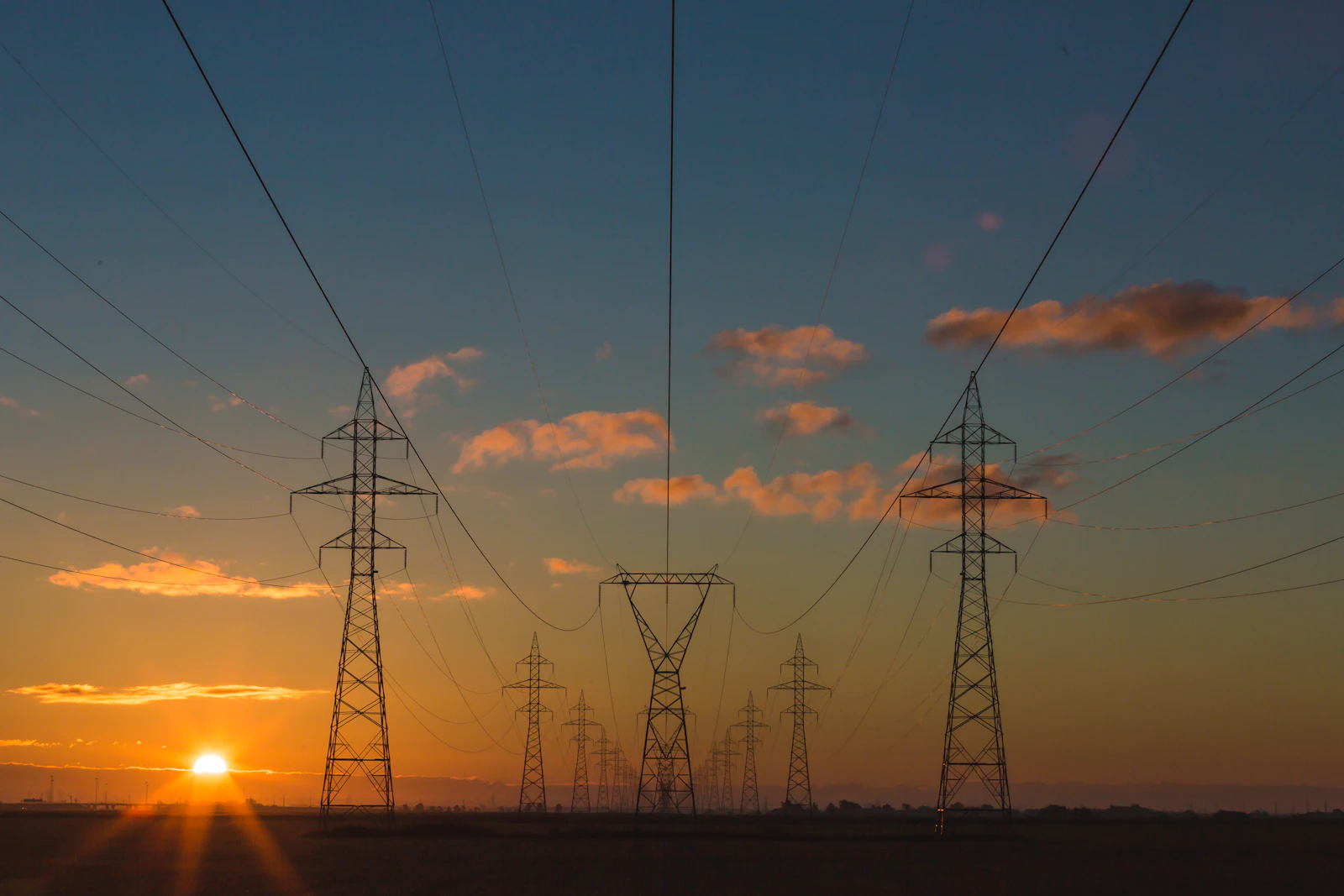
A regulated utility runs its customer business on three systems, and all three tend to sit on Oracle. The customer information system, very often Oracle Utilities Customer Care and Billing or its successor Customer to Meter, holds every account, every rate, and every bill the company has ever issued. The meter data management platform ingests, validates, and stores the interval reads coming off the metering estate. And the outage management system, frequently Oracle's Network Management System, is the platform the control room lives in when the lights go out. Together they are the operational identity of the company: billing accuracy, regulatory compliance, and restoration performance all flow through them.
What has changed is the arithmetic underneath. A meter that once produced one read a month now produces a read every fifteen minutes. For a utility with a million smart meters, that is roughly thirty five billion interval reads a year flowing into the meter data platform, every one of which has to be validated, stored, and made available to billing, settlement, forecasting, and the customer's own usage portal. The hardware those platforms were sized for is aging out, the data volumes keep climbing as advanced metering programs expand, and the next infrastructure refresh is a decision the utility will live with for a decade. That decision is the subject of this article.
This piece is part of our OCI by industry series, and it makes a specific argument: not that OCI should host everything a utility runs, but that for the Oracle shaped core of the estate, the customer information system, the meter data platform, and the data layer behind outage management, OCI is the platform where the migration risk is lowest and the licensing arithmetic works in the utility's favour. We will look at why the estate is Oracle heavy, what each of the three systems demands, which OCI services map to which workloads, and how to sequence the move.
Why utility estates are Oracle heavy
The Oracle Utilities application suite is the reason. Customer Care and Billing, Meter Data Management, Customer to Meter, Mobile Workforce Management, and the Network Management System are Oracle products end to end, built on Oracle Database and Oracle middleware, and they hold dominant positions in the customer and meter side of the utility software market. A utility that licensed this suite over the past two decades did not merely buy applications; it inherited an entire Oracle technology stack underneath them, with WebLogic in the middle tier and a database layer that uses Partitioning for the interval data tables, Advanced Compression for the read history, and frequently Real Application Clusters for the billing core.
Around the suite sits a second ring of Oracle dependence. The enterprise data warehouse that feeds load forecasting and regulatory reporting, the work and asset management system, the geographic information system's database tier, and the financial platform that absorbs the billing output are all commonly Oracle Database workloads, hardened over years and tuned by people who know exactly where the batch jobs bite. The interfaces between these systems are dense and old. The meter data platform feeds billing, billing feeds the general ledger, the outage system reads the connectivity model exported from the GIS, and every one of those handshakes has a deadline attached.
This is why generic cloud migrations stall in utilities. Moving Customer Care and Billing to a cloud that treats Oracle Database as a guest workload means absorbing licensing penalties on processor counting, giving up Exadata performance the batch schedule may quietly depend on, and replatforming the most interface dense applications in the company simultaneously. The estate does not resist cloud; it resists clouds that were not built for what it runs.
The three systems that decide the architecture
Customer information and billing
The CIS is the revenue engine. Whether the utility runs Customer Care and Billing on premises, is evaluating Customer to Meter, or is considering Oracle's SaaS path with Customer Cloud Service, the workload profile is the same: a large transactional database, a nightly batch cycle that prices usage and produces bills, and a calendar of bill runs that cannot slip because late bills become late revenue and regulatory complaints. The batch window is the constraint that matters. Bill segmentation, rate application, and bill print extraction compete for I/O in a fixed number of overnight hours, and any infrastructure decision that lengthens the window is a decision against the business. The CIS also carries the customer data that privacy rules protect, which makes encryption, access logging, and data residency part of the platform conversation from day one.
Meter data at advanced metering scale
The meter data management platform has the most punishing data profile in the company. Interval reads arrive from the head end systems in large nightly or hourly batches, must pass validation, estimation, and editing before billing can trust them, and must remain queryable for years because rate cases, settlement disputes, and customer inquiries all reach back into history. The tables grow without mercy: billions of rows a year for a midsize utility, with Partitioning and compression doing the heavy lifting that keeps queries usable. The platform also has consumers on both sides, billing pulling billing determinants on a deadline and analytics teams wanting the same data for load research, loss analysis, and forecasting. Sizing this workload for the meter count of today guarantees a capacity crisis when the next metering program lands.
Outage management when the storm hits
The outage management system inverts every assumption the other two run on. On a calm day it idles; during a major storm it absorbs a flood of smart meter last gasp signals, customer calls, and crew updates while the control room uses it to group outages to probable devices, dispatch crews, and publish estimated restoration times to a public outage map that the press and the regulator are watching. Demand on the outage platform, the notification pipeline, and the customer facing web and voice channels can jump by orders of magnitude in an hour. Infrastructure sized for the blue sky day fails exactly when failure is most visible, and infrastructure sized for the worst storm sits idle for most of its life. This is the workload where elastic capacity stops being a slide and becomes the design.
What OCI offers a utility
Exadata for the billing and meter data cores
Exadata Database Service is the anchor. A Customer Care and Billing database or a meter data store that runs on Oracle Database today moves to Exadata in an OCI region without replatforming, keeping the same RAC topology, the same Data Guard protection, and the partitioning and compression strategy the schema already depends on. Smart Scan and storage offload matter most exactly where utilities hurt: the overnight window where validation, estimation, billing determinant extraction, and the bill run all fight for throughput. Utilities that move these workloads typically find the batch finishes earlier than it did on the hardware it left, which converts directly into schedule contingency the operations team has not had in years. The same applies to the second ring of plain Oracle Database workloads around the suite, and our guide to Oracle Database on OCI covers the service tiers, the BYOL mechanics, and the migration paths in detail.
Elastic capacity for storms and analytics
The storm problem maps to OCI primitives cleanly. The outage system's data tier stays persistent and protected, while the notification services, the outage map, and the customer communication channels run on compute and Kubernetes capacity that scales out when the weather service issues the warning and scales back when restoration completes. The same elasticity serves the analytics side of the meter data estate: load research, distribution planning studies, and forecasting models that want a large cluster for days, not years. Paying for storm capacity only during storms, and for study capacity only during studies, is the clearest cloud economics in the industry, and it requires no licensing gymnastics because the elastic tier is application code rather than Oracle Database.
The boundary with operations technology
What does not move matters as much as what does. SCADA, energy management, and protection systems live in the control environment, governed in North America by NERC CIP and elsewhere by national critical infrastructure rules, and no serious OCI design for a utility proposes to absorb them. The design instead defines a hard boundary: the real time control layer stays where its certification and latency demand, while the data it produces flows outward through controlled, one directional integration into the analytical and customer platforms on OCI. FastConnect provides the private, deterministic connectivity between OCI, the corporate data centres, and the head end systems, sized for the nightly meter read transfer rather than the average hour. Compartment design, customer managed encryption keys, and full access logging give the compliance team an evidence trail rather than an assurance paragraph.
| Utility workload | OCI service fit | Key constraint |
|---|---|---|
| Customer Care and Billing core | Exadata Database Service, RAC plus Data Guard | Bill run window, customer data protection |
| Meter data management store | Exadata with Partitioning and compression | Interval read ingestion, multiyear query history |
| Outage management data tier | Base Database Service or Exadata, Data Guard | Availability during storm events |
| Outage map and customer notifications | OKE and compute with autoscaling | Demand spikes of orders of magnitude in an hour |
| Analytics and load forecasting | Autonomous Data Warehouse, flexible compute | Burst capacity for studies and rate case work |
| SCADA and energy management | Stays in the control environment | NERC CIP and critical infrastructure rules |
| Development and test estates | Compute and database services scaled on demand | Data masking before production data leaves the core |
The economics a rate case reviewer will read
Utility infrastructure spending faces a review no other industry quite matches: the prudency test. Capital and operating costs flow into rates, and a commission staff analyst will eventually ask whether the spending was reasonable. That cuts both ways for cloud. A utility that lifts an oversized on premises estate into the cloud unchanged creates an operating cost line that is hard to defend; a utility that rightsizes as it moves creates a cost reduction story that supports the next filing. In our OCI engagements the levers are consistent, BYOL against existing licenses instead of repurchasing them, Exadata consolidation of sprawling database servers, scheduled shutdown of nonproduction environments, and storage tiering for the meter read history, and across engagements they average around 40% reduction in OCI spend against the unoptimized baseline. The discipline is to treat the migration as the rightsizing event, because no later moment will have the same political permission to change things.
The second economic fact is that the alternative to moving is not free. The on premises Exadata or server estate under the Oracle Utilities suite has a refresh cycle, and each refresh is a capital event with its own rate case exposure. Comparing OCI consumption pricing against the full refresh cost, including the data centre, the power, and the people, rather than against a depreciated book value, is the honest comparison, and it is the one the commission staff will eventually construct anyway.
A six step path for a utility adopting OCI
- Inventory the Oracle estate and the licenses behind it. Map every database, option, and middleware component under the utilities suite, because the BYOL position sets the economics of everything that follows.
- Classify workloads against the boundary. Separate what is governed by NERC CIP or national critical infrastructure rules from what is corporate IT, and design the one directional data flows between the two before choosing any service.
- Set recovery objectives per system, not per platform. The billing core, the meter data store, and the outage data tier have different tolerances for loss and downtime; let those numbers select the Data Guard topology and the region strategy.
- Build the landing zone for evidence. Compartments, customer managed keys, logging, and access reviews designed so that producing proof for a commission or an auditor is a query, not a project.
- Move in dependency order. Analytics and nonproduction first, the meter data platform next, the CIS last with a rehearsed cutover timed between bill cycles, and FastConnect sized for the nightly read transfer from day one.
- Rehearse the storm before the storm. Load test the outage map and notification pipeline at storm scale, run the failover drill for the billing core, and put both on a calendar, because the first real test should never be the real event.
Where utilities sit in the wider industry picture
Utilities share their architecture problems with their neighbours, and reading the cases together sharpens all of them. The upstream and trading side of the sector, with its reservoir simulation grids and commodity trading risk platforms, is covered in OCI for energy, and a vertically integrated company will recognise itself in both articles. The plant and asset heavy parts of a utility, generation maintenance, work management, and the supply chain behind it, rhyme strongly with the patterns in OCI for manufacturing. And the closest structural cousin is in OCI for telecom, where carriers run the same shape of estate, a massive billing core, a flood of usage records that must be rated and stored, and a network operations layer that must survive demand spikes, against a different regulator.
For a utility, the practical conclusion is the same one we draw across the series. OCI does not need to win the whole company to be the right answer for the Oracle core, and the Oracle core, the CIS, the meter data platform, and the outage data tier, is where the migration risk, the licensing money, and the regulatory attention all concentrate. Plan the move around the bill cycle, the storm scenario, and the evidence trail, and the rest of the estate can follow whatever multicloud strategy the company prefers. As an independent firm with 20+ years of combined Oracle experience and 24/7/365 managed operations behind our recommendations, our advice carries no Oracle sales quota, which is precisely why utilities ask for it before they sign anything.
Free white paper
Go deeper on this topic with The OCI Migration Playbook, a step by step framework for planning and running an OCI migration with less risk. An independent analyst style report with comparison tables and recommendations, free with a work email. Prefer a monthly summary instead? The OCI Brief delivers one practical OCI briefing a month.
Part of a series
This guide is part of OCI by Industry — our complete pillar guide on the topic.
Moving Oracle workloads to OCI, or already running on OCI and not sure the architecture or the spend is right? Most teams bring in a specialist before they commit to a region, a shape, or a Universal Credits number. OCISpecialists.com plans the landing zone, runs the migration, and manages the estate after go live, on a fixed project fee, a managed monthly retainer, or a cost optimization fee paid only on verified savings.